
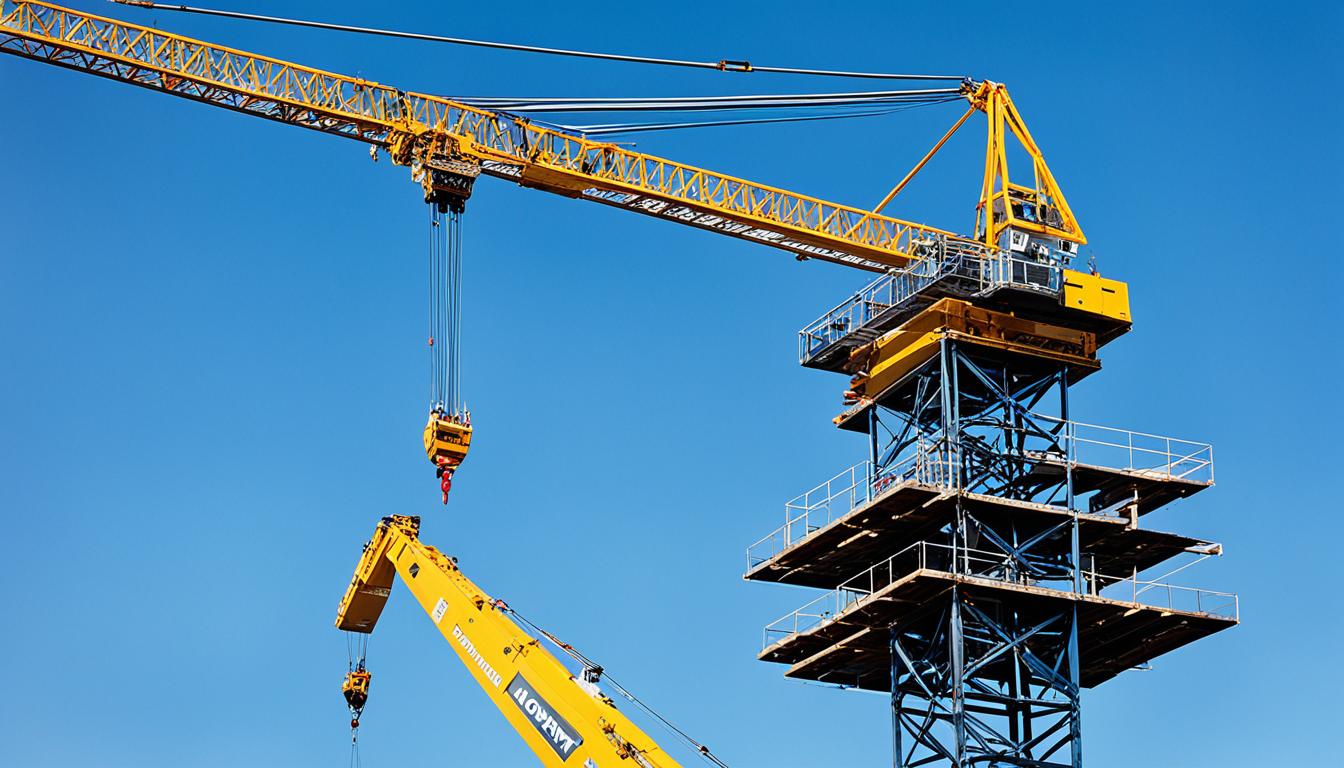
Remote control tower cranes are revolutionising the construction industry by offering unprecedented control, safety, and efficiency through wireless operation and real-time monitoring. These advanced crane systems allow operators to control the crane from a remote location, eliminating the need for a physical presence on the jobsite. This technology has transformed the way construction projects are managed, enhancing productivity, safety, and overall site coordination.
Key Takeaways
- Remote control tower cranes provide enhanced control, safety, and efficiency through wireless operation.
- Operators can control the crane from a remote location, eliminating the need for on-site personnel.
- This technology has improved construction project management, boosting productivity and overall site coordination.
- Remote control systems utilise advanced wireless communication protocols to ensure reliable command and control.
- Integration with IoT and telematics technologies further enhances the capabilities of remote control tower cranes.
Introduction to Remote Control Tower Cranes
The construction industry has witnessed a remarkable transformation with the advent of remote control tower cranes. These advanced crane systems have revolutionised the way construction projects are managed, offering unprecedented control, safety, and efficiency through wireless operation and real-time monitoring.
The Evolution of Tower Crane Technology
The evolution of tower crane design, from traditional cable-operated systems to modern, computerised controls, has paved the way for remote control capabilities. The integration of cutting-edge technology has enabled construction firms to take advantage of the benefits offered by remote control tower cranes, ensuring enhanced productivity, safety, and overall site coordination.
Benefits of Remote Control Crane Operations
By allowing operators to control the crane from a remote location, remote control tower cranes eliminate the need for personnel to physically climb the tower, leading to faster setup times and more efficient material movements. This not only enhances jobsite productivity but also significantly improves construction site safety by removing the risk of falls, collisions, and other incidents associated with working at height.
| Benefit | Description |
|---|---|
| Remote Crane Operation | Eliminates the need for operators to be physically present on the crane, allowing for remote control and monitoring from a centralised location. |
| Improved Safety | Reduces the risks associated with working at height, as operators can control the crane from a safe, ground-level position. |
| Enhanced Productivity | Enables faster setup times and more efficient material handling, leading to increased jobsite productivity. |
| Crane Telematics | Integrates the crane with a broader ecosystem of sensors and software, providing real-time data and predictive maintenance capabilities. |
| IoT Connectivity | Connects the crane to the Internet of Things (IoT), allowing for seamless integration with other construction technologies and data-driven insights. |
Wireless Crane Control Systems
At the heart of remote control tower cranes are the advanced wireless crane control systems that enable seamless communication between the operator and the crane itself. These systems leverage cutting-edge wireless communication protocols, such as Wi-Fi and dedicated radio frequencies, to provide a secure and reliable means of command and control, ensuring uninterrupted operation even in challenging construction site environments.
Reliable Wireless Communication Protocols
The success of remote control tower cranes is underpinned by the robust wireless communication protocols that facilitate real-time data transmission and control commands. These protocols are specifically designed to overcome the potential interference and line-of-sight limitations often encountered on construction sites, ensuring a reliable and consistent connection between the operator and the crane telematics system.
By utilising advanced encryption and authentication techniques, these wireless control systems safeguard the integrity of the data, protecting against unauthorised access and ensuring the construction site safety of the entire operation. The seamless integration of these protocols with the crane’s electronic control systems enables precise and responsive control, empowering crane operators to execute complex manoeuvres with ease and confidence.
Advanced Operator Control Interfaces
Complementing the reliable wireless communication protocols are the intuitive and user-friendly operator control interfaces that allow crane operators to command the remote control tower cranes with precision and efficiency. These advanced interfaces, often incorporating touchscreen displays and ergonomic control devices, provide a comprehensive overview of the crane’s status, load information, and operational data, enabling operators to make informed decisions and respond quickly to dynamic site conditions.
The integration of heavy equipment technology into these control interfaces further enhances the operator’s abilities, providing features such as automated load handling, crane position tracking, and predictive maintenance alerts. This level of crane operator efficiency and real-time monitoring facilitates optimised material handling, improved site coordination, and increased overall jobsite productivity.
Improving Construction Site Safety
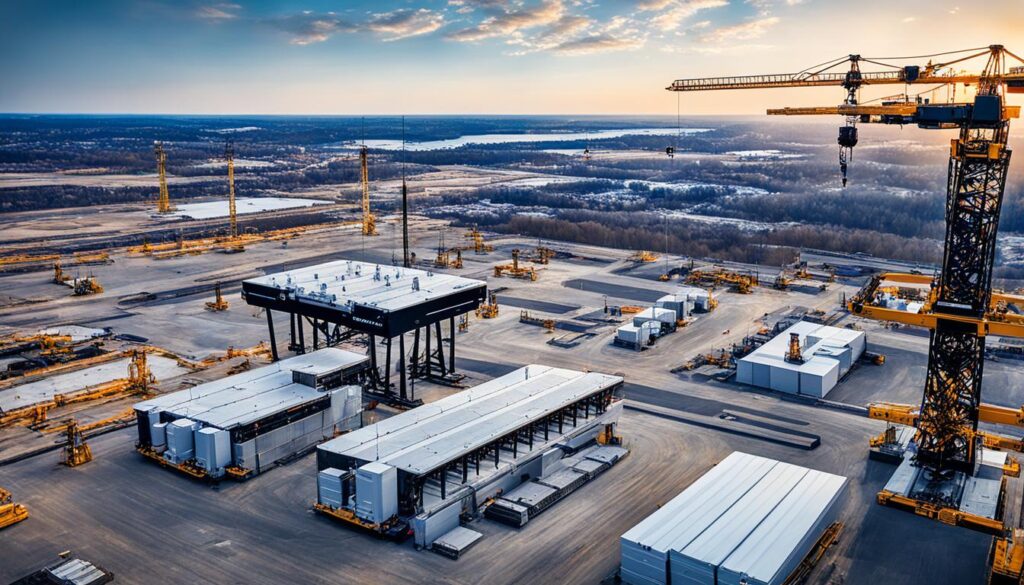
One of the primary benefits of remote control tower cranes is their ability to enhance construction site safety. By eliminating the need for an operator to be physically present on the crane, these systems remove the risk of falls, collisions, and other incidents associated with working at height.
Eliminating Operator Blind Spots
Traditional tower cranes often create blind spots for the operator, who may struggle to maintain a clear view of the entire construction site. Remote control tower cranes, on the other hand, provide operators with a comprehensive, real-time view of the jobsite, thanks to high-definition cameras and advanced monitoring systems. This enhanced visibility allows crane operators to precisely manoeuvre the crane and loads, avoiding potential hazards and keeping workers safe on the ground.
Reducing Risks with Remote Monitoring
Remote control tower cranes are equipped with a range of sensors and telematics systems that continuously monitor the crane’s performance, load handling, and environmental conditions. This real-time data enables operators to identify and address potential safety risks before they escalate, such as overloading, mechanical issues, or changes in wind speed. By proactively managing these factors, remote control tower cranes contribute significantly to the overall safety of the construction site.
remote control tower cranes
The evolution of remote control tower cranes has transformed the construction industry, offering a suite of benefits that enhance efficiency, safety, and productivity on the jobsite. These advanced systems allow operators to control the crane’s movements, load handling, and other functions from a remote location, eliminating the need for personnel to work at height.
By leveraging wireless crane control, remote control tower cranes provide construction firms with a level of control and flexibility that was previously unattainable. Operators can now oversee the crane’s operation from the comfort of a remote control tower, monitoring its activities in real-time and making adjustments as needed. This not only improves the safety of the work environment but also enhances the overall efficiency of the construction project.
The integration of tower crane automation and IoT cranes further bolsters the capabilities of remote control tower cranes. These systems seamlessly connect the crane to a broader network of sensors, software, and cloud-based platforms, enabling construction teams to access a wealth of data-driven insights and predictive maintenance capabilities. This level of connectivity and intelligence helps to optimise crane operations, reduce downtime, and improve jobsite productivity.
The adoption of wireless crane control and remote crane operation technologies has also had a significant impact on construction site safety. By eliminating the need for operators to work at height, these systems reduce the risks associated with falls, collisions, and other incidents that can occur when personnel are physically present on the crane. This heightened focus on safety helps to protect the wellbeing of workers and promotes a more secure construction environment.
As the construction industry continues to embrace digital transformation, the role of remote control tower cranes and associated heavy equipment technology will only become more pivotal. These innovative solutions not only enhance crane operator efficiency but also drive improvements in overall jobsite productivity, ultimately contributing to the success of construction projects.

Enhancing Jobsite Productivity
Remote control tower cranes have a significant impact on jobsite productivity, enabling construction teams to optimise their material handling and overall site coordination. By allowing operators to control the tower crane from a remote location, these systems eliminate the need for personnel to physically climb the tower, leading to faster setup times and more efficient material movements.
Efficient Material Handling
With remote control tower cranes, construction crews can precisely coordinate the movement of materials, streamlining the loading and unloading process. The ability to control the crane from a centralised control room enhances the efficiency of material handling, reducing overall project timelines and minimising downtime.
Real-Time Operational Data
Remote control tower cranes are equipped with advanced telematics systems that provide real-time operational data to the control room. This data, which includes crane position, load weight, and asset utilisation, enables construction managers to make informed decisions, optimise workflow, and maintain a high level of jobsite productivity.
| Benefit | Impact on Jobsite Productivity |
|---|---|
| Efficient Material Handling | Streamlined loading and unloading processes, reduced project timelines |
| Real-Time Operational Data | Informed decision-making, optimised workflow, and enhanced asset utilisation |
Integration with IoT and Telematics
The integration of remote control tower cranes with the Internet of Things (IoT) and telematics technologies further enhances their capabilities and benefits. By connecting these remote control tower cranes to a broader ecosystem of sensors, software, and cloud-based platforms, construction firms can unlock a wealth of data-driven insights and predictive maintenance capabilities.
Connected Crane Ecosystems
The convergence of remote crane operation, tower crane automation, and IoT technologies has given rise to interconnected crane telematics systems. These advanced heavy equipment technology solutions enable real-time monitoring, remote diagnostics, and seamless integration across the construction site. By leveraging the power of wireless crane control, construction teams can now access a comprehensive view of crane performance, utilisation, and maintenance requirements, ultimately enhancing jobsite productivity and crane operator efficiency.
Predictive Maintenance and Analytics
The integration of IoT cranes with cloud-based analytics platforms empowers construction firms to adopt a proactive approach to crane maintenance. Through the collection and analysis of critical operational data, these systems can identify potential issues, forecast maintenance needs, and optimise repair schedules. This data-driven approach not only minimises unexpected downtime but also enables construction teams to make informed decisions that drive construction site safety and improve overall jobsite productivity.
Training and Certification
The successful implementation of remote control tower cranes requires comprehensive training and certification programmes for operators and site personnel. These programmes focus on familiarising users with the advanced control interfaces, wireless communication protocols, and safety procedures associated with remote crane operation.
Operator Training Programs
Rigorous operator training programmes are essential to ensure the safe and efficient use of remote control tower cranes. These programmes cover the intricacies of the wireless control system, teaching operators how to seamlessly manage the crane’s movements, load handling, and other functions from a remote location. Additionally, they emphasise the importance of maintaining situational awareness, recognising potential hazards, and adhering to industry-standard safety protocols.
Industry Standards and Regulations
The deployment of remote control tower cranes must comply with the industry’s stringent standards and regulations. Construction firms must ensure that their operators and technicians are properly certified, meeting the requirements set forth by regulatory bodies and professional associations. These standards not only govern the technical aspects of remote crane operation but also address the training, documentation, and ongoing maintenance necessary to uphold the highest levels of safety and efficiency on the jobsite.
Emerging Trends and Future Developments
The rapid advancements in remote control tower crane technology are driving the emergence of new trends and future developments that will further enhance the capabilities of these systems. As the construction industry continues to embrace digital transformation, we can expect to see increased integration with advanced technologies, such as augmented reality, artificial intelligence, and autonomous control systems.
One such trend is the integration of remote control tower cranes with augmented reality (AR) platforms. This integration will allow operators to visualise the crane’s movements and load placement in real-time, overlaying digital information directly onto their field of view. This enhanced situational awareness will further improve safety and efficiency by eliminating blind spots and providing precise data on the crane’s operation.
Furthermore, the incorporation of artificial intelligence and machine learning algorithms into tower crane automation systems will enable predictive maintenance and optimised workflow management. By analysing vast amounts of operational data collected through crane telematics and IoT cranes, these intelligent systems will be able to anticipate potential issues, schedule proactive maintenance, and recommend optimal material handling strategies to boost jobsite productivity and crane operator efficiency.
Looking ahead, the ultimate goal of the construction industry is to achieve fully autonomous control tower cranes, where the crane’s movements and load handling are completely automated, without the need for a human operator. This level of automation will revolutionise the way construction projects are executed, enhancing construction site safety and unlocking new levels of efficiency and productivity on the jobsite.

Conclusion
Remote control tower cranes have emerged as a transformative technology that is reshaping the construction industry. By providing operators with the ability to control and monitor remote control tower cranes from a remote location, these advanced systems offer a multitude of benefits, including enhanced construction site safety, increased jobsite productivity, and improved overall site coordination.
The integration of tower crane automation and wireless crane control has revolutionised the way construction projects are managed, driving efficiency, safety, and productivity to new heights. Through the seamless remote crane operation enabled by these systems, construction firms can optimise material handling, leverage real-time operational data, and tap into the power of IoT cranes and crane telematics.
As the construction industry continues to embrace the transformative potential of remote control tower cranes, we can expect to see further advancements in heavy equipment technology and the emergence of even more sophisticated crane operator efficiency solutions. With a focus on safety, productivity, and connectivity, the future of the construction industry is poised to be more efficient, adaptable, and data-driven than ever before.
FAQ
What are remote control tower cranes?
Remote control tower cranes are advanced crane systems that allow operators to control the crane’s movements, load handling, and other functions from a remote location, eliminating the need for personnel to be physically present on the crane.
How do remote control tower cranes improve construction site safety?
Remote control tower cranes improve construction site safety by removing the operator from the crane’s tower, eliminating the risk of falls, collisions, and other incidents associated with working at height. They also enable better visibility and monitoring of the jobsite, reducing the chances of accidents.
What are the benefits of remote control crane operations?
The key benefits of remote control crane operations include improved efficiency, enhanced productivity, and better overall site coordination. By allowing operators to control the crane from a remote location, these systems enable faster setup times, more efficient material handling, and real-time monitoring of crane activities.
How do remote control tower cranes integrate with IoT and telematics?
Remote control tower cranes can be integrated with Internet of Things (IoT) and telematics technologies to create a connected crane ecosystem. This integration enables features such as predictive maintenance, real-time data analytics, and improved overall site coordination through data-driven insights.
What training and certification requirements are associated with remote control tower cranes?
The successful implementation of remote control tower cranes requires comprehensive training and certification programs for operators and site personnel. These programs focus on familiarising users with the advanced control interfaces, wireless communication protocols, and safety procedures associated with remote crane operation, as well as ensuring compliance with industry standards and regulations.
What are the emerging trends and future developments in remote control tower crane technology?
As the construction industry continues to embrace digital transformation, we can expect to see increased integration of remote control tower cranes with advanced technologies, such as augmented reality, artificial intelligence, and autonomous control systems. These advancements will further enhance the capabilities of these systems, driving even greater efficiency, safety, and productivity on construction sites.
Comments are closed